
Mango Sago is a quintessential tropical dessert, loved throughout Asia for its creamy texture and the vibrant flavor of sweet mangoes. Originating in Hong Kong, this dessert quickly spread across neighboring countries, finding a special place in countries such as Singapore, Malaysia, and Thailand.
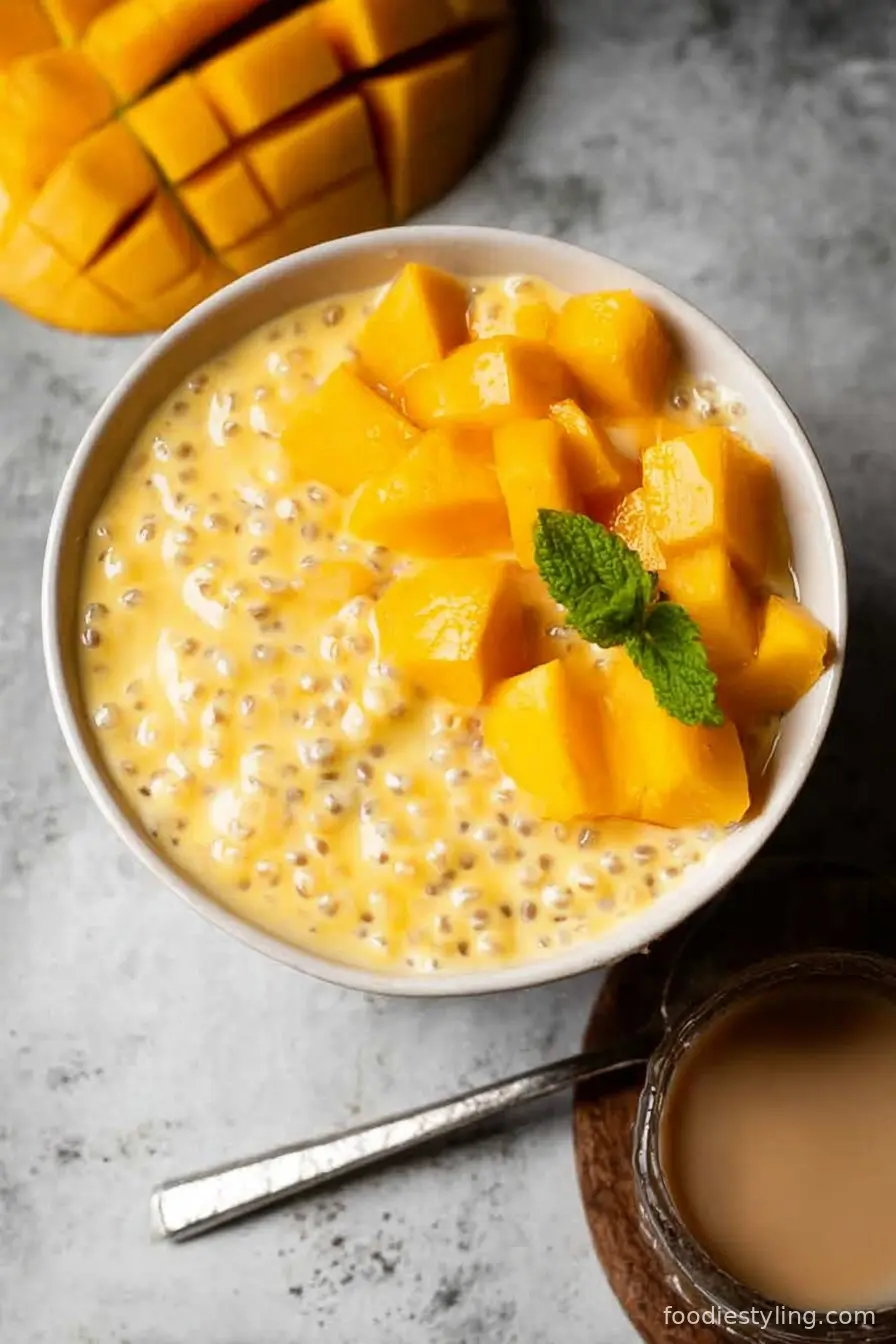
The recipe comprises simple, wholesome ingredients: luscious mangoes, small sago pearls, coconut milk, and a touch of sugar. Its irresistible appeal lies in the way it brings together the creaminess of coconut milk with the juicy, tangy sweetness of fresh mangoes, balanced by the soft, chewy texture of sago pearls.
Mango Sago is typically served chilled, making it a perfect treat to beat the heat in summer or as a refreshing finale to a rich meal. Its popularity skyrocketed in the late twentieth century, coinciding with the global fascination for Asian desserts and fusion cuisine.
Not only is Mango Sago visually inviting with its golden hues, but it also offers a delightful burst of flavors and contrasting textures that appeal to dessert lovers of all ages.
Whether enjoyed in an upscale restaurant or prepared at home, Mango Sago promises a sensory experience that transports you straight to tropical paradise.
This dessert is prized for its simplicity and the ability to highlight the natural goodness of mango — a fruit widely cherished for its sumptuous taste and nutritional benefits. As you embark on your Mango Sago journey, prepare to be enchanted by this silky, fruity, and utterly satisfying treat.
Ingredients
- 2 large ripe mangoes (about 400g, peeled and diced)
- ½ cup small sago pearls
- 3 cups water (for boiling the sago)
- 1 cup coconut milk
- ½ cup evaporated milk or whole milk
- ¼ cup sweetened condensed milk (adjust to taste)
- 2-3 tablespoons sugar (optional, adjust for sweetness)
- A pinch of salt
- Extra diced mango, for garnish
- Fresh mint leaves, for garnish (optional)
Instructions
- Rinse the sago pearls in a fine mesh sieve under cold water until the water runs clear.
- Bring 3 cups of water to a boil in a medium saucepan. Add the sago pearls and stir gently to prevent sticking.
- Cook the sago on medium heat for about 10-12 minutes or until the pearls become mostly translucent, stirring occasionally. Remove from heat.
- Cover and let the sago sit for another 10 minutes until fully translucent. If a white dot remains in the center, it's okay.
- Drain the sago and rinse under cold running water to remove excess starch. Set aside.
- Peel and dice the mangoes. Reserve some cubes for garnish and blend the rest with condensed milk and a pinch of salt until smooth.
- In a large mixing bowl, combine the blended mango puree with coconut milk, evaporated milk (or whole milk), and sugar (if desired). Mix until well incorporated.
- Fold in the cooked sago pearls. Stir gently to distribute them evenly throughout the mixture.
- Chill the Mango Sago dessert in the refrigerator for at least 2 hours so the flavors meld and the dessert is refreshingly cold.
- To serve, ladle Mango Sago into individual bowls or glasses. Top with reserved diced mango and a sprig of mint if you like.
- Serve immediately and enjoy this delightful chilled dessert.
Nutritional Information
Mango Sago is a relatively light but indulgent dessert, offering both refreshment and nourishment. A typical serving (about 180g) contains approximately 200-250 calories, making it a lighter alternative to many rich creamy desserts like ice cream or traditional puddings.
The base of the dessert, fresh mango, is a rich source of vitamin C, vitamin A, dietary fiber, and several essential minerals, supporting immune health and digestion.
The sago pearls, derived from the pith of tropical palm stems, are high in carbohydrates—great for a quick source of energy but low in protein and fat. Coconut milk contributes healthy fats, particularly medium-chain triglycerides, which are easier for the body to digest and utilize as energy.
Using evaporated or whole milk increases creaminess and boosts calcium and vitamin D content. While the sweetened condensed milk and added sugar enhance flavor, these do elevate the total sugar content—making portion control advisable for those monitoring sugar intake.
If using lower-fat or plant-based milks and less sugar, Mango Sago can easily be adapted for a lighter or vegan diet. Overall, this dessert is a deliciously balanced way to enjoy fruit and natural sweetness, so long as it is savored in moderation.

Wine and Beverage Pairings
Mango Sago shines when paired with light, refreshing beverages that accentuate its tropical flavors. A chilled jasmine or oolong tea offers a floral aroma and gentle bitterness that balances the dessert’s sweetness. For a non-caffeinated choice, a cold coconut water or a sparkling lemonade wonderfully complements the fruity notes.
If you prefer to serve Mango Sago as part of a festive meal, a lightly sweet dessert wine such as Moscato d’Asti or a late-harvest Riesling works beautifully, accentuating the mango’s natural sweetness without overwhelming the palate.
Regardless of your pairing, serve all drinks chilled to keep the tropical vibes intact.
Cooking Tips and Variations
Achieving the perfect Mango Sago is all about balancing flavors and textures. For the best results, always select ripe, juicy mangoes, such as Alphonso, Ataulfo, or Honey Mango, as these varieties offer a vibrant color and intense sweetness that define the dessert.
When boiling the sago pearls, stir gently and avoid excessive agitation to prevent them from breaking apart. To keep sago perfectly chewy, rinse well under running cold water after boiling to remove surface starch and prevent clumping.
If you wish for a silkier consistency, strain the mango puree before mixing it with coconut milk. Variations abound: you can replace coconut milk with low-fat, non-dairy milk for a vegan version, or adjust the ratio of evaporated to coconut milk to suit your taste.
Some recipes enhance tropical flavors by adding a splash of passion fruit pulp or lychee syrup. For a healthier version, reduce the amount of condensed milk or substitute it with natural sweeteners like honey or stevia.
You can also fold in other diced fruits, such as papaya or kiwi, for additional flavor and color. Experimenting with presentation—serving in tall glasses, coconut shells, or layered parfaits—makes Mango Sago both elegant and fun for gatherings and special occasions.

Serving Suggestions
Mango Sago is best enjoyed cold, making it an ideal dessert for warm-weather gatherings, barbecues, or as a refreshing finish to a spicy meal.
Serve it in clear dessert bowls, glass cups, or even shot glasses for an elegant presentation that showcases the dessert’s golden hue and the delicate sago pearls suspended in creamy mango-coconut base.
Garnish each serving with extra diced mango, mint leaves, or a sprinkle of toasted coconut for visual and flavor contrast. For a sophisticated touch, layer the Mango Sago with coconut cream and mango puree in small parfait glasses, creating a striking layered look that is both inviting and delicious.
This dessert is also perfect for potlucks and picnics, as it can be prepared in advance and chilled until ready to serve. If making ahead, stir the mixture well before ladling into serving dishes to ensure even distribution of sago pearls and avoid settling at the bottom.
For a fusion twist, serve Mango Sago atop a bed of shaved ice or alongside sticky rice. Whether savored as a simple weeknight treat or featured in a festive party spread, Mango Sago is sure to delight all with its creamy, fruity, and refreshing character.
Health Benefits
Mango Sago delivers a wealth of nutrients alongside its indulgent taste. Mangoes themselves are rich in immune-boosting vitamin C, eye-protecting vitamin A, and a range of antioxidants that promote skin health and reduce inflammation. The presence of dietary fiber in mango aids digestion and supports gut health.
Coconut milk contains lauric acid, known for its antimicrobial properties and ability to promote healthy cholesterol levels. While sago pearls are mainly a source of quick energy through carbohydrates, their easy digestibility makes Mango Sago a gentle dessert for sensitive stomachs.
By moderating the amount of sweetened condensed milk and sugar, this treat can fit into a balanced diet and be adjusted for lower caloric intake. Vegan adaptations using plant milks and the use of less refined sweeteners further boost the health profile.
As with any dessert, moderation is key, but enjoying Mango Sago provides not just a sensory delight but also a dose of tropical fruit goodness in every spoonful.
Frequently Asked Questions
Yes, while fresh mangoes provide the best flavor and aroma, canned mangoes can be used when fresh are not available. Just ensure they are ripe and unsweetened for the most authentic taste.
Absolutely! Substitute the evaporated milk with any plant-based milk (such as almond or oat milk), and use a vegan condensed milk or another sweetener like maple syrup to keep the recipe entirely plant-based.
Store Mango Sago in an airtight container in the refrigerator for up to two days. Stir well before serving, as the sago pearls may settle at the bottom during storage.
Soaking is not strictly necessary for small sago pearls. Simply rinse them before cooking to remove excess starch, then cook in boiling water as described.
Freezing is not recommended, as the texture of sago pearls and coconut milk may become unpleasantly grainy when thawed. It's best enjoyed fresh and chilled.
Mango Sago is a delicious, visually captivating dessert that embodies the lush flavors of the tropics. With its creamy coconut base, sweet ripe mangoes, and chewy sago pearls, this dish offers a harmonious blend of taste and texture that is both comforting and refreshing. The recipe is easy to prepare and can be customized to suit dietary preferences, making it an excellent choice for family meals, parties, and special occasions. Whether you savor it on a hot summer day or serve it at your next celebration, Mango Sago is guaranteed to impress and delight. Enjoy this beloved classic and bring a touch of Asian-inspired elegance and tropical sunshine to your table.
Ingredients
- 2 large ripe mangoes (about 400g, peeled and diced)
- ½ cup small sago pearls
- 3 cups water (for boiling the sago)
- 1 cup coconut milk
- ½ cup evaporated milk or whole milk
- ¼ cup sweetened condensed milk (adjust to taste)
- 2-3 tablespoons sugar (optional, adjust for sweetness)
- A pinch of salt
- Extra diced mango, for garnish
- Fresh mint leaves, for garnish (optional)
Instructions
-
1Rinse the sago pearls in a fine mesh sieve under cold water until the water runs clear.
-
2Bring 3 cups of water to a boil in a medium saucepan. Add the sago pearls and stir gently to prevent sticking.
-
3Cook the sago on medium heat for about 10-12 minutes or until the pearls become mostly translucent, stirring occasionally. Remove from heat.
-
4Cover and let the sago sit for another 10 minutes until fully translucent. If a white dot remains in the center, it's okay.
-
5Drain the sago and rinse under cold running water to remove excess starch. Set aside.
-
6Peel and dice the mangoes. Reserve some cubes for garnish and blend the rest with condensed milk and a pinch of salt until smooth.
-
7In a large mixing bowl, combine the blended mango puree with coconut milk, evaporated milk (or whole milk), and sugar (if desired). Mix until well incorporated.
-
8Fold in the cooked sago pearls. Stir gently to distribute them evenly throughout the mixture.
-
9Chill the Mango Sago dessert in the refrigerator for at least 2 hours so the flavors meld and the dessert is refreshingly cold.
-
10To serve, ladle Mango Sago into individual bowls or glasses. Top with reserved diced mango and a sprig of mint if you like.
-
11Serve immediately and enjoy this delightful chilled dessert.
Approximate Information for One Serving
Nutrition Disclaimers
Number of total servings shown is approximate. Actual number of servings will depend on your preferred portion sizes.
Nutritional values shown are general guidelines and reflect information for 1 serving using the ingredients listed, not including any optional ingredients. Actual macros may vary slightly depending on specific brands and types of ingredients used.
To determine the weight of one serving, prepare the recipe as instructed. Weigh the finished recipe, then divide the weight of the finished recipe (not including the weight of the container the food is in) by the desired number of servings. Result will be the weight of one serving.
Did you make this recipe?
Please consider Pinning it!